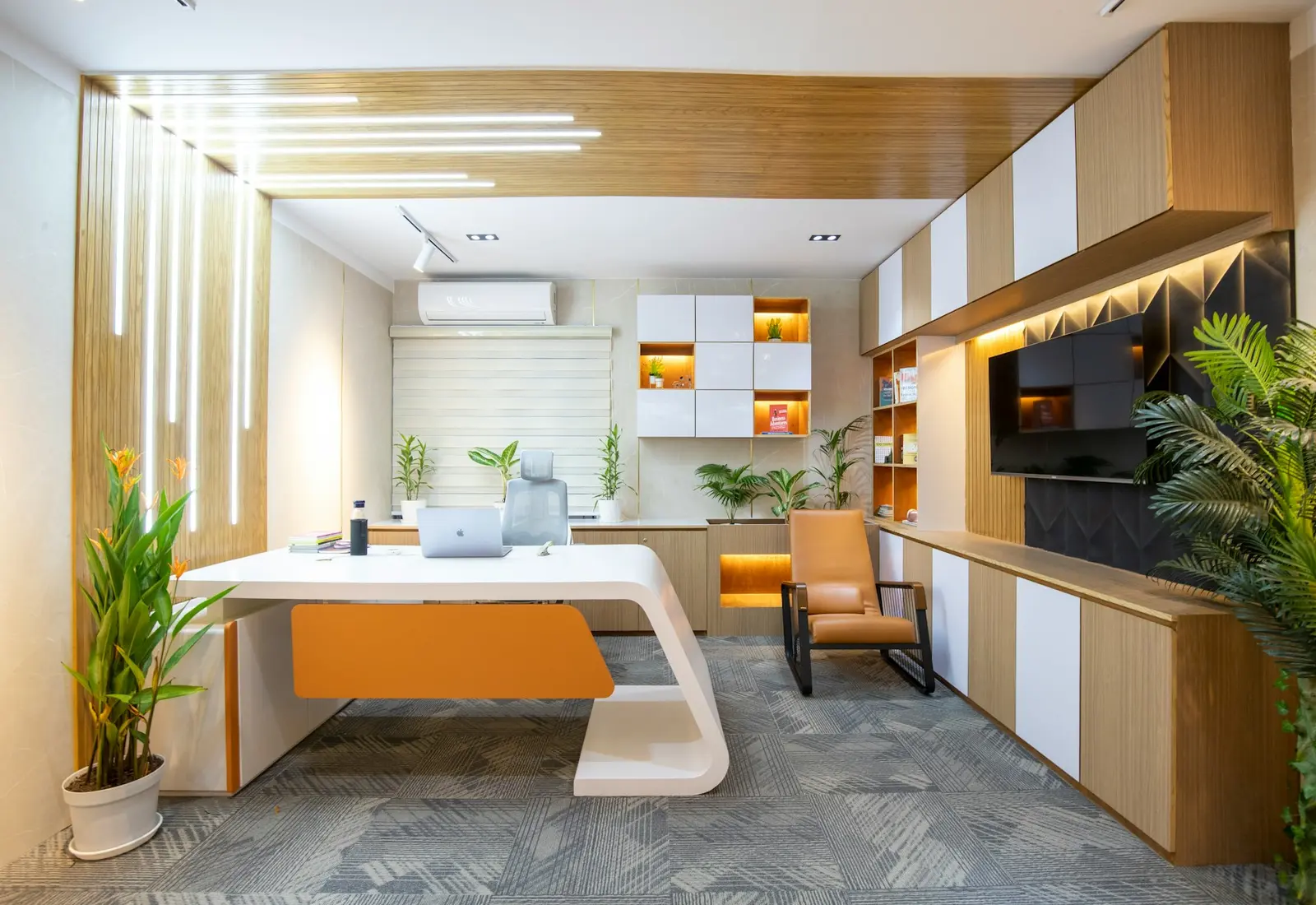
In briefPrioritize stable thermal comfort, good ventilation, glare-controlled daylight, acoustic choice and ergonomic work settings before decorative features. Productivity improves when people can match the environment to the task: quiet focus, confidential calls, collaborative work and recovery.
Design from human needs
- Body: Air, temperature, light and posture
- Mind: Control, focus and cognitive load
- Team: Proximity without constant interruption
Fix the invisible fundamentals first
Temperature swings, stale air, glare and background speech consume attention even when people cannot name the cause. Review ventilation and maintenance evidence, test occupied conditions at different times, and ask employees where discomfort repeats. A beautiful photograph says little about a full workday.
Daylight can support experience, but uncontrolled brightness and screen reflection create strain. Use shading, balanced electric light and workstation orientation. Give people some control where the building allows it.
- Condition: Air and temperature; Observe: Complaints by zone and time; Design response: Commissioning, maintenance and local adjustment
- Condition: Light; Observe: Glare, dark zones and screen reflection; Design response: Shading, task light and orientation
- Condition: Noise; Observe: Speech distraction and confidential leakage; Design response: Zoning, absorption and enclosed choice
- Condition: Posture; Observe: Reaching, static sitting and discomfort; Design response: Adjustable furniture and movement
Give every task an appropriate setting
Open space is not inherently productive or unproductive. The problem is a single setting expected to support calls, concentration, mentoring and confidential discussion simultaneously. Create distinct acoustic zones and enough enclosed rooms, then make their purpose obvious.
Measure room and focus-space demand at peak times. If people cannot find a place for a call, policy signs will not solve the conflict. Flexible office settings should be judged by the range and availability of useful environments.
Treat the workplace as a monitored system
Before changing design, establish a baseline: complaints, room demand, focus ratings, support tickets and observed use. After the change, repeat the measures and ask whether priority work became easier. Avoid claiming that one design feature directly caused business performance.
Assign ownership for temperature, lighting, furniture, noise and room availability. Design quality declines when no one owns the experience after handover.
FAQ
Does natural light improve productivity?
It can improve experience when glare and heat are controlled. Treat daylight as part of a balanced lighting and comfort strategy, not a standalone guarantee.
Are open offices bad for focus?
They can create speech distraction when used for every task. Provide acoustic zoning, quiet choices and enough rooms for calls and confidential work.
What should be measured after redesign?
Track comfort complaints, focus and collaboration ratings, room availability, observed utilization and relevant employee or customer outcomes against a baseline.